Are you a chewing gum-aholic? Or why trying to substitute “good” treats for “bad” treats just doesn’t work

I was a big gum chewer at one time. I started chewing in college after I decided to quit smoking and I never stopped. I rationalized it…I wasn’t smoking, wasn’t eating sugar, wasn’t damaging my teeth (or so I believed, my dentist would have disagreed with me on this one) and I wasn’t taking in calories. When I was bored, I chewed gum. I also chewed when I was upset or anxious, and especially when I had the urge to eat something sweet. And when I was driving in traffic and worrying about being late, I’d use the chewing gum to distract myself. I went through A LOT of gum. It wasn’t until I got real with my desire to lose my last 10 pounds that I gave up my gum habit once and for all. Because I learned that when I was popping gum into my mouth I was simply avoiding the uncomfortable feelings associated with my stressful thoughts.

And, I found out that there is one BIG reason to reduce or quit chewing gum – artificial sweeteners

I’d known about the potential dangers of artificial sweeteners for years (remember Tab?) but I rationalized I was having just a small amount. But, sweeteners, even artificial sweeteners, cause a spike insulin which can cause weight gain by stimulating fat storage. They make you feel hungrier and increase your sweets/carbs cravings. Additionally, sweeteners act on the reward centers in the brain like a drug releasing opioids and dopamine. When we consume sweets, we just keep wanting more and more. For more on this, visit my blog post: Why am I so hungry Part 2. And, artificial sweetener use has been linked to diabetes, birth defects and cancers. So, if you are chewing gum or using mints to deal with your stress and your cravings to help you feel better and lose weight…probably not a good long term strategy.

I decided to stop all sweeteners and it was magic!

When I finally decided once and for all to completely stop consuming ALL sweeteners (I do have a treat now and again), my cravings magically disappeared. Well…not magically…I had three days of sugar withdrawal which were not fun and I was forced to sit with my cravings and deal with my brain – which was freaking out and trying to convince me to eat sweets. This was mighty UNCOMFORTABLE but manageable. While I was chewing gum, I was putting off the inevitable, dealing with my feelings and my sweets addiction.

You can instead learn to manage stressful thoughts

What I learned from my coaches and my studies of cognitive behavior is that our thoughts drive our feelings so, when we have a sudden desire, which is a feeling, for a sweet, be it gum or cookies, there is always a thought driving that feeling. Can you figure out what the thought is? If you can, explore it. Is it a true? Can you exchange it for a less stressful thought?

And, it’s ok to indulge once in a while

Will I chew gum again? Probably, but when I do, it will be a choice. I won’t be using it to quash whatever stressful feelings are happening in my brain or put off a carb indulgence. It’s always possible, once in a while, to indulge in sweet foods and treats without feeling out of control. Just notice WHY you are popping that piece of gum or mint into your mouth. Don’t let it be a mindless affair. If you are having a stressful thought or an emotion that you don’t want to deal with, figure out what it is (it really helps to write things down) and start working on your thoughts. You’ve got this!
How I started eating more fat and lost over 10 pounds

I used to be fat-aphonic. For my whole life it seems, I was told that fats found in foods – notably eggs and meat would raise “bad” cholesterol and put me at risk for atherosclerosis – a building up of plaque in the arteries which contributes to heart disease, stroke and dementia. This is also what I learned in my medical program (during the paltry amount of time they spent teaching us about nutrition) and fat as the cause of disease is still being promulgated by healthcare practitioners everywhere.

The promotion of fat causing heart disease is thanks in part to three Harvard researchers who were paid off in the 1960’s by the sugar industry to play down the effects of sugar on heart disease and to play up saturated fats as the cause. Thanks to this “research” millions of people (including myself), as advised by their well-meaning healthcare professionals, the media, friends and family, to reduce consumption of fats which has led to an increase consumption of carbs. And, not just any carbs. Our consumption of refined grains, baked goods and sugar has exploded since that time. While we were all having the “eggs are good vs. eggs are bad argument,” we significantly increased our refined carbohydrate intake and reduced our fat intake. Meanwhile, study after study shows that higher carbohydrate diets, particularly those high on the glycemic index (more sugary, processed foods) contribute to both raised LDL (“bad” cholesterol) and lowered HDL (“good” or protective cholesterol). And…heart disease is STILL the number one killer in the US and obesity has gotten worse, way worse since the 60’s. So this low-fat/high carb diet we’ve been eating…NOT WORKING to decrease health risks.

Despite the recent research, we are still eating high-carb, low fat

Even though there has been a ton of buzz around the benefit of fats lately, many of us don’t realize how carb-rich and vegetable and fat-deficient our diets still are. I regularly take a food intake of all of my new clients I am amazed at how many grains and fruits they are all still eating and how little fat and veggies. Before I transitioned to a higher fat diet, I thought I was doing great because I was eating whole grain breads and non-refined carbohydrates like millet and oatmeal and lots and lots of fruit. Last May, I took the plunge and purged all non-vegetable carbs from my life for several months and increased my fats and vegetables. It wasn’t until I greatly reduced most carbs (yes, even whole grains, fruit and beans) from my diet and increased my vegetable and fat intake that the pounds really starting shifting.

How often should one consume fats and what kind?

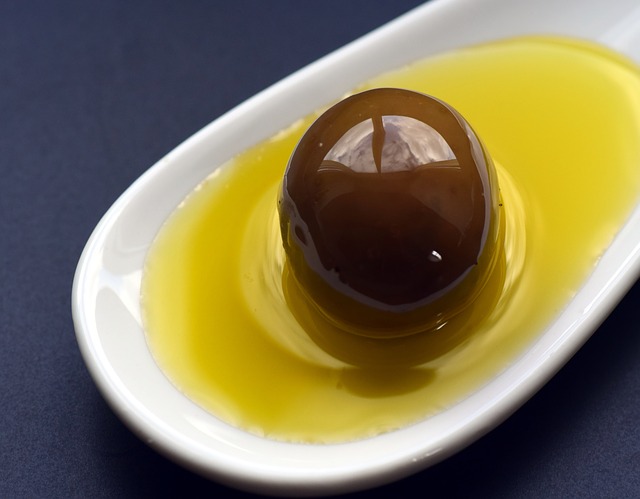
I typically recommend that my clients consume some fat at every meal. Some foods already have fat in them like whole eggs, red meat, lamb and salmon. However, if you are consuming plain egg whites, white fish, chicken or turkey, I recommend adding some fats such as avocado, extra-virgin olive oil, ghee (clarified butter), avocado oil, olives and coconut oil. Nuts and nut butters (in limited amounts if you are trying to lose weight) are also wonderful sources of fat. I recommend cooking in a high-quality saturated fat like coconut oil or ghee. Save the olive oil for salad dressings.

What about red meat?

Even though we no longer have to “fear the fat,” leaner meats like chicken, fish and turkey might be a better choice because of the toxic load that is stored in fats (yes, the fat on your body too – another reason to have low body fat). Fat is a repository for many of the toxic chemicals in our environment such as pesticides. Therefore, consider limiting high fat foods (like beef) to once per week. Do not fry your foods and cook meats and fish in a grill that will allow most of the fat to drop off. Consider shifting more of your fat to vegetarian sources like nuts and avocados. Choose organic meats whenever possible. Grass fed beef would be a better choice if you can swing it.

How about dairy?

A dairy discussion truly deserves its own blog post and I will definitely take on this issue at a later date. On the whole, I recommend avoiding dairy. Dairy causes inflammation in many people and is a major cause of food sensitivity and has been linked to various diseases. I recommend getting your protein and fats elsewhere.

The Magic of Omega-3’s

Omega-3’s are a type of fat called an essential fatty acid (EFA). They are called essential because the body can’t produce them. Omega-3 fats are associated with reducing inflammation, helping our skin and hair stay healthy, preventing atherosclerosis, reducing heart disease and stroke, helping relieve symptoms of ulcerative colitis, menstrual pain, and joint pain, decreasing breast cancer risk and improving cognitive function and mental health and more. Besides in the supplement form, Omega-3 fatty acid sources include the “SMASH” fatty fishes (sardines, mackerel, salmon and herrings) and other types of fish as well as eggs. Note, certain eggs contain greater amounts of EFAs depending on their diets. EFAs are also found in vegan sources such as flaxseeds, hemp, edamame, walnuts, algae, chia seeds and other nuts and oils.

When you pursue your dreams, you seem to get super lucky…A lesson from The Alchemist by Paulo Coelho

I was reading one of the late Wayne Dyer’s books. He mentioned the book, The Alchemist, by Paulo Coelho, and said it had had an enormous impact on his life. He said it’s a short book full of wisdom. I liked the idea of “short” so I took it out from the library. One of the themes of the book that comes up over and over again is that if you have a life goal (the author calls this one’s “personal legend.”) the universe will conspire to make your dreams come true. In other words, when you pursue your dreams you seem to get awfully lucky.

Have you let time allow you to forget your dreams?

Coehlo defines the personal legend as something you discover when you are young when everything seems possible, when you aren’t afraid to dream. As time passes, many of us become convinced that it’s impossible to realize this dream. Have you been afraid to act on your dreams because you are worried about the amount of time it will, the money it will cost or what others think?

When you challenge yourself to live your dream, the universe conspires to help you

I’ve seen this over and over again with my clients who are trying and trying to lose weight or make major life changes. Once they finally decide on their goals and decide to be unstoppable, somehow things just work out. They find the resources they need, they are able to focus and maintain to do what is needed to achieve their goals. I experienced this when I felt called to return to school to become a Physician Assistant. I had been teaching yoga for many years and felt that I needed a medical degree with its knowledge and privileges to truly serve people. I was already in my early 40s with two small children at home and I was taking on a 5-year, very expensive, time consuming and intellectually challenging commitment, which required that I return to school to both do undergraduate medical pre-requisites, subjects I had never studied on the college level having liberal arts degrees, and earn a master’s degree. I was told that getting into PA school was extremely challenging, and the fact that I was limited by geography because of my children’s school and my husband’s work would make it nearly impossible and, after a few years and a lot of hard work, here I am today.

Other people may have thoughts about your goals. You don’t have to believe their thoughts.

How many times have medical professionals or well-meaning friends or colleagues told you that you are too “old” to lose weight or that it’s too hard once you hit 35 to lose? How many times have you heard that it’s your genes and there is nothing you can do about it? What about your other goals? Have well-intentioned friends and family told you it’s too late to pursue a second career and why not just stay where you are? I remember when I was in a chemistry undergrad pre-req class at my local community college with some pre-med and nursing students. The pre-med students were all in their 20s and the nursing students ran the gamut from 18 to 50. Several of them, like me, were pursuing a mid-life career change. One nursing student, around my age, I’ll call her Sara, told me that I would NEVER get into PA school because of the low acceptance rate and that, even if I did, it would be too hard at my age and I probably wouldn’t be able to hack it. Her attitude was “why even try because you are going to fail.” By the way, I call this failing ahead of time. Sara said I should do something easier. She herself was quite accomplished with two Master’s degrees so I found this attitude puzzling. I did consider what she said and weighed my options. In the end, I decided to take a chance and, being slightly rebellious in nature, I decided I would “show her.” What I really was doing was showing MYSELF that I had the capacity to be unstoppable.

My Food Prep Philosophy + a recipe for a WEEK’S WORTH of breakfast in 15 MINUTES! (plus baking time)

My Food Prep Philosophy + a recipe for a WEEK’S WORTH of breakfast in 15 MINUTES! (plus baking time)

What’s one of the secrets to sustainable weight loss? FOOD PREP. When you have food prepped ahead of time, you don’t even have to think about it. You let your grown-up executive/frontal brain do the planning, shopping and prepping so when you are hungry, your survival brain doesn’t take over and encourage you to eat off your healthy protocol. Planning your meals is a way to make a loving commitment to your goals and it’s amazing to wake up in the morning and have your delicious meal already prepared. First of all, you don’t even have to think about what you are going to eat and secondly, it’s like a little gift you’ve left yourself (how cool is that?)

Objections to food prep?

A lot of my clients don’t like food prepping. The two reasons I hear for this are “I don’t have enough time” and “I like to be spontaneous.” The latter reason, enjoying spontaneity, is completely understandable, but know that your goal to lose and maintain weight loss is likely at odds with your desire to eat whatever you are in the mood for. Decide right now that your health goals take priority over your desire for spontaneous munching and find your spontaneity and joy elsewhere and start planning and prepping! The first reason, limited time, is easily solved with some creative planning and shopping. Your prepped meals don’t have to be super fancy and it’s totally ok to take shortcuts, like buying pre-chopped veggies (now available in many grocery stores) and/or using a food service that cooks for you or partially prepares meals. Just get into the habit of thinking ahead of time what you are going to eat and your health and weight loss goals will become much more attainable.

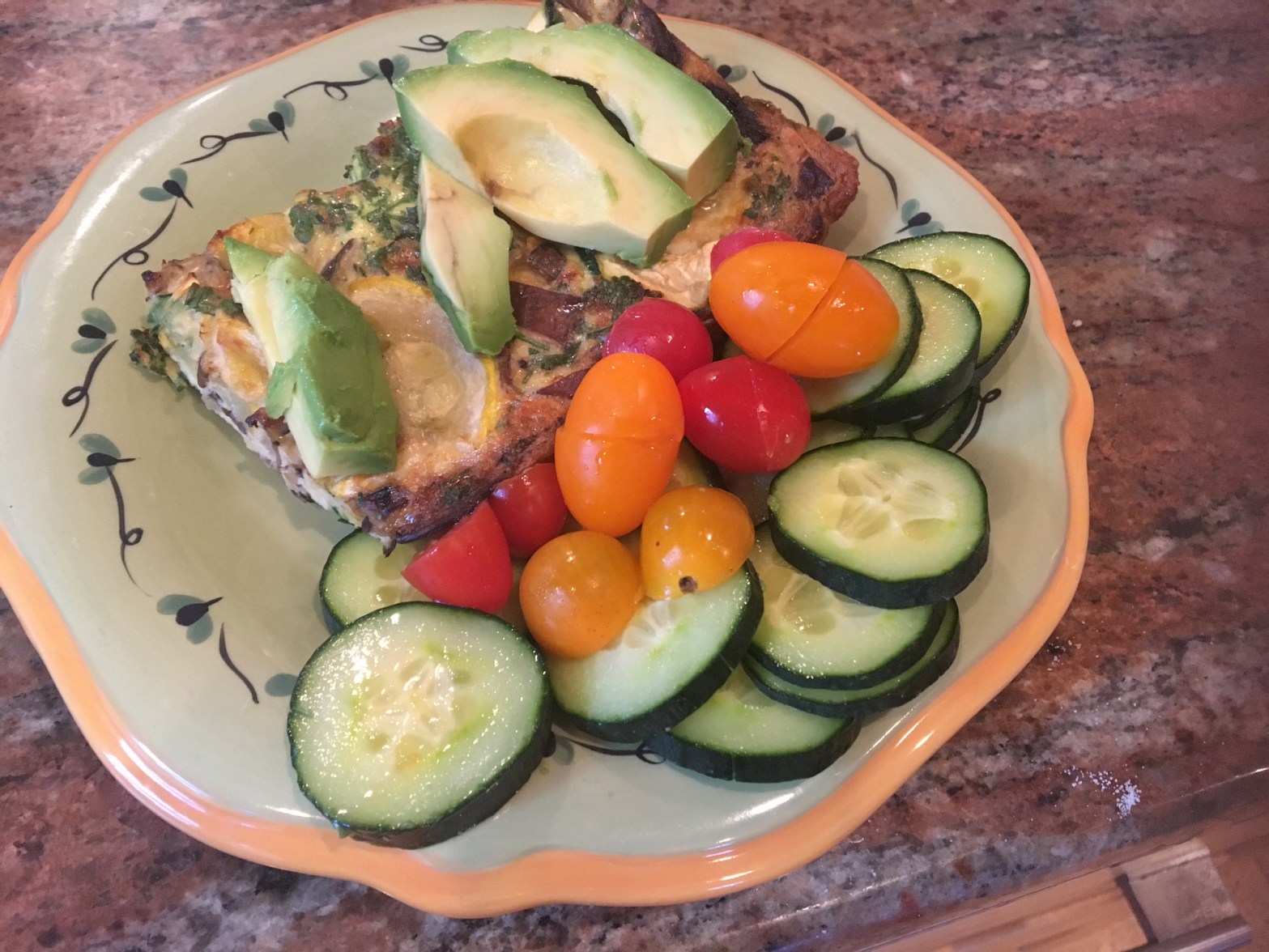
My Delicious SUPER EASY Breakfast Egg Bake – 15 minutes (plus baking time) and you have breakfast for a week!

Ingredients:

  • 6 whole organic eggs
  • 1 quart (32 ounces) egg whites
  • 4 cups chopped non-starchy* organic vegetables (I used zucchini and yellow squash)
  • 1 cup chopped mushroom (I used shitake but any type you like is fine) – optional
  • 1 packed cup chopped organic parsley (feel free to use dill or any other spices you like, again optional)
  • 1 Tbs ghee, coconut oil or organic butter
  • spray oil (I use olive or coconut)
  • salt and pepper to taste

*non-starchy veggies: broccoli, asparagus, spinach, kale, brussels sprouts, zucchini, yellow squash, peppers, kale, collards, chard etc.

Directions

  • Preheat oven to 350 degrees F
  • Spray a 9×13 pyrex, stainless or ceramic baking dish with spray oil

emptypan

  • Heat up a large skillet
  • Add ghee, coconut oil or butter
  • Add vegetables. After 2-3 minutes, add mushroom.
  • Meanwhile, beat the whole eggs first then add the egg whites and finally the chopped parsley, salt and pepper to the eggs.
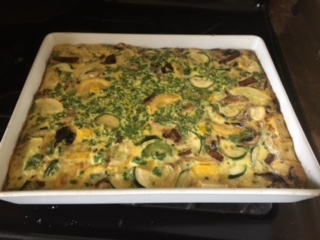
  • When the veggies are almost soft, transfer them to the baking dish and spread evenly

veggiesinpan veginpan uncooked

  • Pour the eggs/egg white/parsley mix on top.
  • Bake for approximately 50 minutes (sometimes takes a bit longer depending on the type of vegetable used). Note: can also be baked in muffin tins, cooking time will be shorter.

cooked

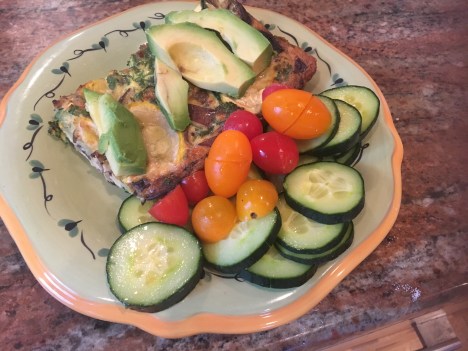
  • When cool, slice into 8 slices and store. Serve on it’s own or with cooked or raw veggies and/or avocados.

breakfast

Enjoy and let me know what you think!

The scale scared the &*$ out of me this morning

The scale scared the &*$ out of me this morning.

After almost two weeks of traveling for work, attending dinner meetings, socializing, and not being quite as attentive to my food protocol as usual, I got the on the scale this morning to find that I had gained several pounds. I normally weight myself daily but was unable to for several days. Panic set in, which is understandable. I’ve worked so hard to lose and maintain my last 10 pounds and here I’d gone and screwed it up in a week and a half. I had the sudden desire to just lie in bed and eat all day. I spent a good 10 minutes contemplating the fantasy of putting on a great movie (or 5) and just eating and eating and not worrying about the results. I imagined myself surrounded by cracker crumbs, chocolate wrappers, soduku and my remote control. And then I SNAPPED OUT OF IT and realized that number would not dictate how I was going to feel about myself nor how I was going to behave.

For so long, I’ve let the scale dictate my worth as a person. If the number was “good” I would feel amazing (for a while anyway). If the number was “bad” I felt defeated and like a failure, insecure about my physical appearance and value as a human. Isn’t it amazing that I gave this one foot piece of plastic, glass and metal so much power? And I know I’m not alone. I have several clients who have initially refused to weigh themselves, stating that this is just too much of an emotional burden. But why? I like to question my beliefs and the beliefs of others and, in questioning and researching, I have concluded that the desire to have a certain outcome on the scale is part of the need to receive approval from outside sources. This is a natural part of being human – seeking outside approval and acceptance has kept us alive for millions of years. In ancient times, group inclusion was essential for survival as no one wanted to be left behind as this would equal death. We have our inner selves – our essential natures, and our outer selves which is our perception of the world and what we need to do to “fit in” and stay safe. I believe that when we get on the scale and the number is not what we would like or what we believe we “should” be by cultural standards, there is a clash between our inner view of ourselves and the outer feedback, and this can cause stress.

But, we are no longer living in caves fearing the saber tooth tiger. In fact, one of our greatest dangers to our health these days is self-harm from poor lifestyle choices. The vast majority of Americans are overweight or obese (almost 70% of women and almost 74% of men) and our number one cause of death continues to be heart disease with stroke, dementia and Alzheimer’s trailing not far behind. Yes, there is a genetic component to these illnesses but that is very much amplified by lifestyle choices.

Using the number on the scale to beat up on ourselves may lead us to potentially sabotage ourselves by making worse lifestyle choices – if we let it. If we allow the scale to dictate who we are as people, we are missing out on a tool that can help us get to our goals. The scale is only data, it’s not a reflection of who you are as a person. It is a tool that you can use to help you achieve your goals or a tool that you can give power to and hurt yourself with. Decide right now that you are going to use the scale as a neutral piece of data and instead of letting it own you, use the scale for what it’s meant for…as a tool to let you know if your habits are consistent with your health goals.

Do weigh yourself daily, but set an intention before stepping on the scale that this is only data. Set a goal for what you’d like to see on the scale and work lovingly with yourself to align your habits to meet your goals. In my case, no, my habits have not been consistent with the goals I’ve set for myself. Time to re-align with my goals and get to the place I want to get to. Why don’t you join me?

I cheated on my diet and I feel bad about myself

I cheated on my diet and I feel bad about myself

I define of cheating as eating or drinking an unplanned treat. Notice the work “unplanned” here. If you PLAN a treat and eat that treat, you are setting a limit for yourself and keeping the commitment you made to yourself. But, if you eat an unplanned ice cream or pizza, or drink a glass of wine, that can feel really icky. It feels icky because you are breaking a promise you made to yourself and because you are behaving out of sync with your goals and dreams. You might blame this on your weakness or your lack of willpower. I can assure you that willpower has nothing to do with this so just let that thought about yourself go. When you try to use willpower you are trying to conquer your own self, your own thoughts and desires. This is a conflicted view of how we take on life – a person at war with herself. What if instead, you were able to go with the flow of your own natural appetite and satiety, eat when you are hungry, stop when you are not? If you did this, you would find your natural weight and stay there. If you are eating more fuel than your body needs, if you are “cheating” on foods that are keeping you from your goals, you are moving away from the flow of what your body truly needs.

Cheating can help you learn

Cheating is a basically a mistake and mistakes are AMAZING because they are the number one thing we learn from so, instead of castigating yourself, use this mistake as an opportunity to go deeper and to get to know yourself better. Know that your desire for our “forbidden” foods like flour and sugar is completely normal. Our bodies crave cheap sources of energy especially if we have eaten this way for a long time. So what to do?

So, what to do?

First of all…stop! Just because you made a mistake doesn’t mean the day is over. I’ve talked to a lot women who, after they cheat, continue eating off their protocols for the  day or even longer. It’s the “screw it, I cheated so the whole day is gone” attitude but it doesn’t have to be this way. Consider this a mistake. So…you made a mistake. So what? Just get right back on your eating protocol IMMEDIATELY and try to figure out what prompted the cheat. Most importantly, DO NOT beat yourself up for making this mistake. In fact, you are NOT allowed to beat yourself up EVER.

Now, go deeper…

Ask yourself “What was I thinking just before I ate this?” and: “Why was I thinking this?” Ask yourself:  “Are those thoughts are serving my goals?” Thoughts are merely habits and you have the power to change your habits. So, once you begin noticing your thoughts you have an amazing tool to change your life because you are creating those thoughts yourself and you have the power to change them. The first step is simply awareness. First, identify the thought(s) then write it down on paper. If you try to just think of them in your brain, your brain will play tricks on you and keep giving you new thoughts. Write things down, it slows the brain down so you can really work on yourself to make deep and lasting change. Once you have the thought on paper, decide if you want to keep it or ditch it.

The late Wayne Dyer, a well-known motivational speaker and author, has a wonderful way of talking about choosing your thoughts. He says thoughts come by on a conveyer belt. You pick one up but you can also put it back and pick up another one. Your thoughts are the creative force behind your success so choose them carefully. If you pick one up that doesn’t serve you, just put it back on the conveyer belt. If you start recognizing non-productive thoughts and replacing them with ones that serve you, you will be far less likely to cheat on your diet or any long-term goals you have for your life.

Why am I so hungry? Part 2

Why am I so hungry? Part 2

Do you ever feel hungry a few minutes after a meal? Do you ever eat then get ravenous an hour or two later? Do you find yourself feeling dizzy, lightheaded or nauseous if you don’t eat every 3 hours? Do these feelings cause panic in you? Unless you are truly hypoglycemic (a medical condition that your provider can diagnose), this is likely due to a misunderstanding of your hunger signals due either to the foods you choose or to confusion over physical versus emotional hunger. In my post last week I discussed the differences between physical and emotional hunger. If you haven’t already read that article, I highly suggest you do. You can find it here.

You can get the symptoms described above if you regularly eat foods that elevate your blood sugar such as sugar and white flour. When blood sugar levels rise, the hormone insulin is released into the bloodstream to help the cells take up the glucose, some of which will be used for energy with the excess stored as fat. After this rapid uptake of glucose, you might experience a “crash” that feels awful. So, the more you eat sugar and foods that raise your insulin like sugar and flour, the more your blood sugar will spike and crash. Not only does this lead to feeling fatigued but it also may sabotage your weight loss goals.

Certain foods can mess with your natural hunger signals

Sugar and other sweeteners (like honey, molasses, maple syrup, agave and artificial sweeteners) over time will mess up the “hungry hormone,” ghrelin and the “satiety hormone” leptin that go from your stomach to your brain. Flour, alcohol and processed foods, MSG and other excitotoxins (a chemical added to food which stimulate your brain and can also wreak havoc on your gut. Examples include: autolyzed yeast extract, autolyzed wheat extract, yeast extract and more) will also interfere with your hunger signals.

Foods can act like a drug

Sugar, flour and processed foods act on the reward centers in the brain like a drug. Food manufacturers are well aware of this and design their foods for maximum pleasure. Here’s how it works: when we eat sugar, we release opiods and dopamine (a feel good neurotransmitter) in your brain. The more we eat sugar and other quick pleasure foods (like flour and processed foods), the more the dopamine receptors start to down-regulate and you need MORE AND MORE to get the same feeling. And, when you stop eating these foods you can have uncomfortable withdrawal symptoms.

Try an experiment

Stop eating all flour, all sweeteners and all processed foods for one week and see how you feel. You might feel a bit off for a few days and likely you will get cravings for those foods. Some people call this sugar withdrawal and there are numerous theories as to what causes it such as neurotransmitter changes (e.g. dopamine) and fungal (candida) die off. This can last several days. Whatever the reason, I’ve had clients complain of moodiness and cravings. But, this will pass and you may notice that you feel lighter and more energetic. Just give it a try. Sit with your cravings and your feelings, I promise they won’t hurt you!

Why am I so hungry? Part 1

Why am I so hungry? Part 1

How often do you feel true physiological hunger? If you are over your ideal weight you are eating sometimes when you are not physically hungry. That’s just the way it works. I had a hard time wrapping my brain around this one and couldn’t get those last 10 pounds off my body until I finally realized I AM OVEREATING. It was like a big “Aha!” moment for me.

A lot of my clients know they are overeating or even binge eating (eating way past the point of fullness and not being able to easily stop) but don’t know how to manage these behaviors. A lot of us don’t even realize that we are overeating. That was me. I thought I was hungry and it was a feeling I didn’t like. I used food to dull all of those feelings I thought were hunger. I came to find out they were emotional feelings NOT physical hunger feelings and I did not want to feel them.

Here’s what I figured out:

Physical hunger is just that, it’s physical…it’s a signal from your stomach that travels to your brain to tell you “time to eat.” I started tuning in and I figured out that when I was physically hungry I had a sensation in my stomach- it would growl and I would get a “light” feeling.

Emotional hunger and cravings come from a thought that your mind creates and manifests in the body. When I tuned in I discovered that when I was “emotionally” hungry or craving, I would feel “empty” or get a hunger-like sensation in my heart, throat, mouth or brain or I would get a sugar or carb craving. I also found that when I ate too much processed foods, sugars and baked goods, it would mess up my body’s hunger signals (more on foods that mess with your hunger signals and how they do it in next week’s blog.)

So, what are your hunger signals? Start to pay attention today. How do you feel before eating? Where is the sensation? Is your stomach rumbling or do you feel more of an emotional hunger in the heart or the mouth? Do you feel  an emptiness or a vague sense of “wanting something”?

Was it physical hunger? Sit down to eat, pay attention during your meal, notice when that feeling of hunger goes away then STOP EATING. Remind yourself that you can always eat again later.

Was it emotional hunger? if so, STOP and try to figure out what you are FEELING. When you use food and alcohol to dull stressful or icky feelings, you also dull nice feelings too. And, if you push down your feelings with food, they will still be there for you…so eating and drinking to avoid them doesn’t really work anyway. Whatever thoughts and feelings you have, welcome them. Welcome them and sit with them.

These techniques will not only help you lose weight but will help you maintain your weight loss. AMAZING!

Next week I will discuss specific foods that interfere with your body’s ability to tell when it’s hungry or full. Stay tuned…

“I want to lose weight but I don’t have time right now”

“I want to lose weight but I don’t have time right now”

I hear that from clients a lot! Like them, you know you do better with your diet when you plan and prep your meals ahead, but you have too many other things to do on the weekend. You want to exercise, but first you need to take your kids to their practice. Your doctor has told you to get your blood sugar down, but you are taking care of your parents. Or visiting colleges with your high schooler. Or dealing with contractors. Or paying bills. Or a million other things. Fact is, you haven’t done anything to achieve your health and wellness goals, because juggling family, work and everything else takes up all your time and then some. 

You’re busy. I get it. You aren’t doing what you need to do for your health and wellness because you believe you have no time, and your own well-being seems like the least important thing. But what if I told you that being “busy” is nothing but a smokescreen? Because it is.

When you define yourself as “busy” you are avoiding the most important things in your life you want because “busy” is a DREAM STEALER. Making your dreams come true requires that you prioritize your dreams, set them as definable goals, then plan for success. This is the ultimate in self-care.

Stop for a moment and write down the 3 things you want to do before the end of this year for your health and wellness. Write them down on paper or on your smart phone notepad. You can always burn that piece of paper or delete the note. Admit to yourself what you really, REALLY want. DREAM BIG. Dreams become goals when you admit them to yourself fully and they become reality when you plan for them. Now, ask yourself, “am I putting any time into those things that I really desire?” Isn’t it worth thirty minutes to one hour per day to work on your actual goals?  When you set your goals and then align your thoughts and actions to achieve them, that’s how you make your dreams come true! So what are you waiting for? Get busy with your dreams!

“I’ve tried everything for weight loss and nothing has worked”

“I’ve tried everything for weight loss and nothing has worked”

I was talking with a woman at the grocery store today who complained that she had tried EVERYTHING to lose 20 pounds since having children 21 years ago. 21 years of trying to lose weight! I get it. She said “I’ve tried every diet out there, Atkins, Weight Watchers, Paleo and NOTHING literally nothing has worked. Maybe I lose 5 pounds but then I gain it back and I feel so deprived and hungry on these diets.” She asked me “how come these diets work for other people and not for me? I’m just giving up and enjoying my food.”

She was so discouraged. This is a common feeling. We all want the perfect diet plan that will help us lose and we research and research, we google and ask everyone to no avail. And this is because, there aren’t ANY perfect plans because it’s not the plan, it’s your brain that’s keeping you from losing and keeping off the weight.

So many of us start a plan, don’t lose, or lose a bit then slip up, go back, slip up, go back until we eventually give up. Is this you? This was me until I figured out that one of the secrets to long-lasting weight loss is wide-awake, mindful eating all the time, every day. I tried cleanses, detoxes, fasts and pretty much every diet out there. And…yes, you do need an amazing, nutrient-rich diet BUT if you do not practice mindful eating every day, eating only when you are hungry and stopping when you not hungry, you will likely not get to your goals and stay there. Mindful eating also involves working on your cravings and learning how to manage those overwhelming feelings that we turn to food and alcohol to deal with. And, best of all, mindfulness allows you to enjoy the food you are eating. So…you can really enjoy your food AND not feel deprived. Isn’t that amazing? It makes losing weight so much less effortful.

I invite you to go deeper into your own hunger signals by taking a few breaths before each meal and then pausing during the meal to check in with yourself. Ask yourself…am I really hungry? If not, put down the fork. Remember, you can always eat again later.

I didn’t get to tell this amazing information to the woman in the grocery store because she ran off to finish her shopping. I hope she sees this post!